
Smuggling on balloons: The Belarus – Lithuania cigarette pipeline
Stringent border controls forced smugglers to find new ways of delivering cigarettes to Lithuania. The latest trend is to smuggle items by meteorological balloon. A joint investigation by Buro and LRT reveals the clandestine inner workings of this illicit enterprise.
BY LAND AND BY AIR
So far this year, Lithuanian customs officers and border guards have seized more than six million packets of cigarettes bearing Belarusian excise stamps. This is almost double the amount recorded for the whole of last year.
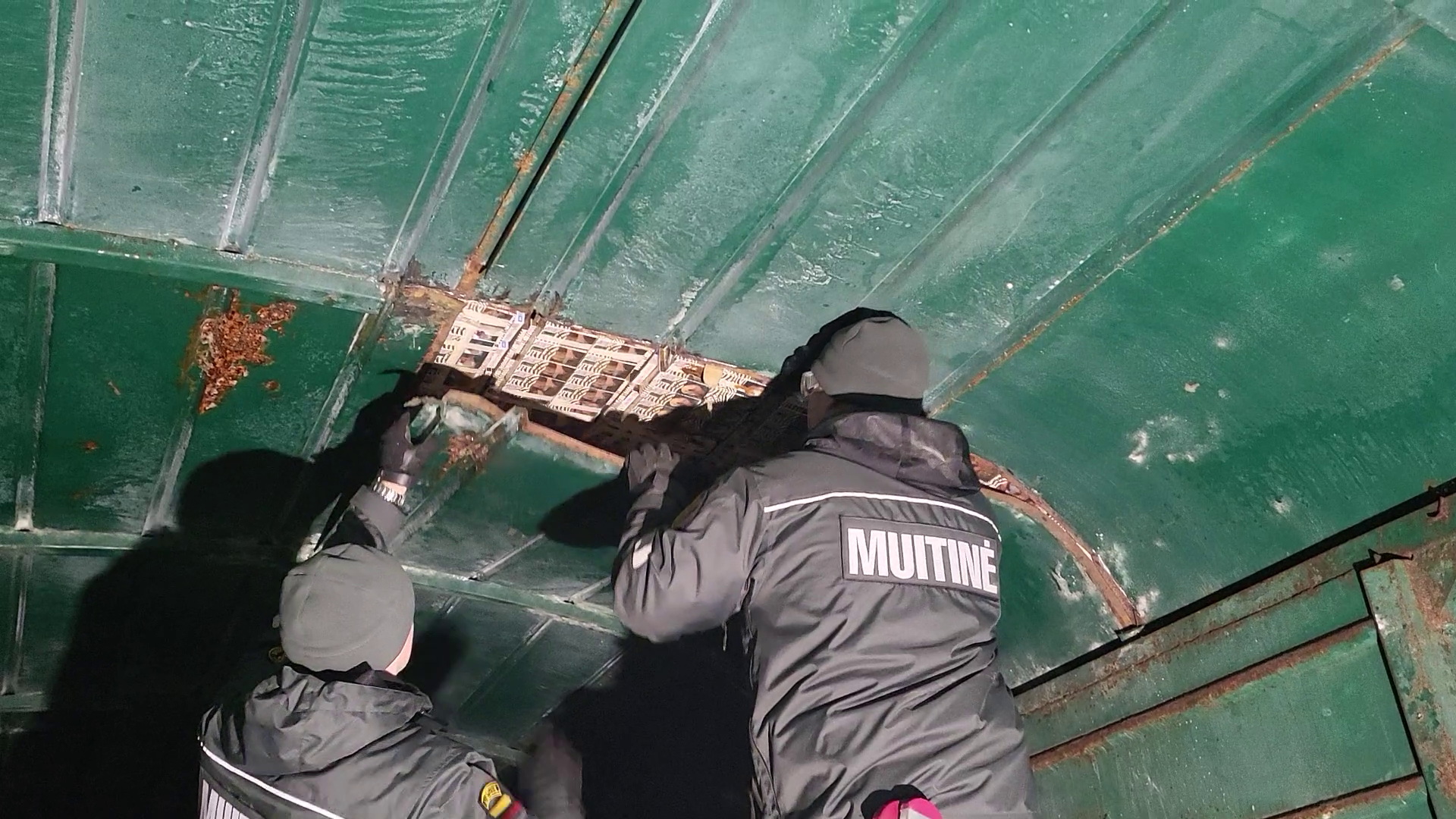
Lithuanian customs officers discover Belarusian cigarettes in a railroad car. Source: muitine.lrv.lt
“Recent trends show that the amount of smuggled cargo is increasing, while the number of cigarettes seized at the border is decreasing. Most of them are intercepted inside the country”, said Gediminas Kulikauskas, a representative of the Lithuanian Customs Criminal Service, in an interview with Buro.
In response to the migration crisis, Lithuania has built a fence along its border with Belarus and closed four of its six border checkpoints in an attempt to combat smuggling and circumvention of sanctions. Lithuanian customs officers are carrying out intensive checks on every car. In such circumstances, smugglers look for new routes and methods of delivering cigarettes across the border.
“They first tried using drones for this purpose, but they could only carry small quantities. In addition, these drones were quite expensive. Losing them greatly reduced the profits. After that, other methods of transporting cigarettes were invented, such as using balloons”, said Antanas Montvydas, deputy head of Lithuania’s State Border Guard Service (VSAT), in an interview with LRT.
So far this year, Lithuanian border guards have intercepted around 550 weather balloons and 50 drones carrying contraband from Belarus. More than 890,000 packs of cigarettes were seized.
“It’s true that these balloons with cigarettes flew there from Belarus. And if I said that we’ll sort it out, then we are sorting it out. We found these people. We identified two of them immediately. At this point, reportedly, there are a dozen and a half. Yesterday [October 30] the KGB chairman reported to me that there are many such groups of people in Belarus”, admitted Aleksandr Lukashenko.
Since the start of this year, the State Border Committee of Belarus has publicly reported over 20 cases of Belarusian citizens being detained with balloons and drones. A total of 81 drones, 88 meteorological balloons, 359 gas cylinders, 98 GPS trackers, two thermal imagers, 10 cell phones, and 36 SIM cards issued by Lithuanian mobile operators were seized during the detentions. For example, law enforcers raided a clandestine workshop for the manufacture of drones and a garage full of weather balloons in Hrodna in August this year.
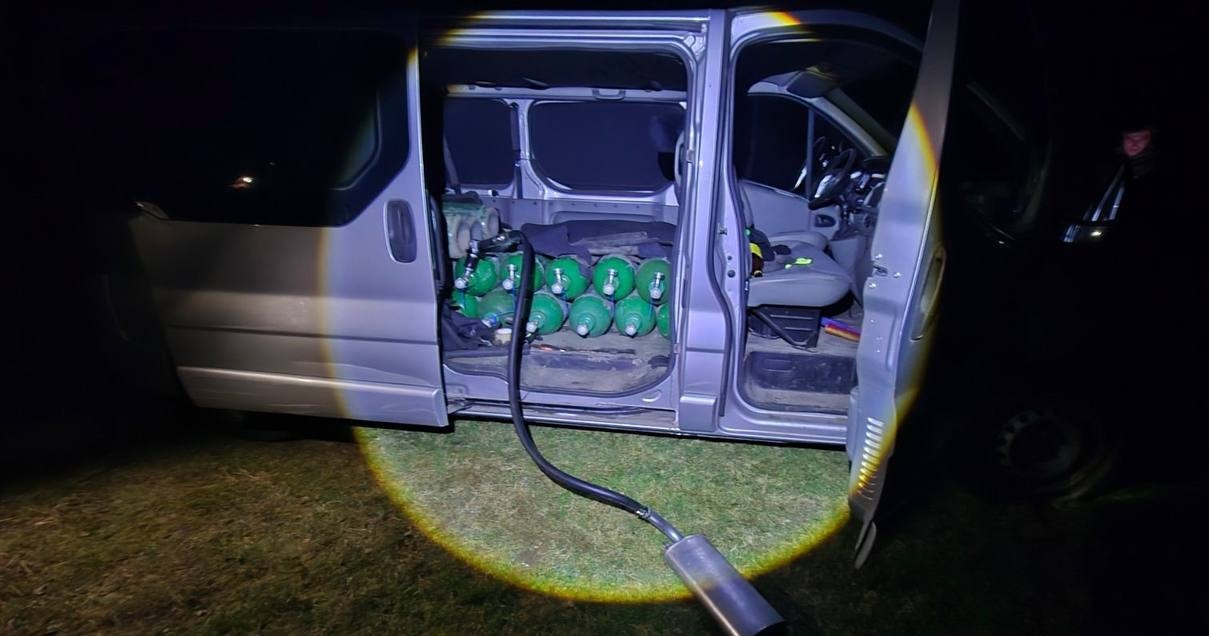
Hrodna border guards detained Belarusians with gas cylinders and a weather balloon. Source: t.me/gpkgovby
To understand how the smugglers operate, the Buro team and its partners at LRT studied official summaries and court documents and spoke to both official and anonymous sources.
BENEFICIAL CONTACTS
The smuggling community is a closed collective. To gain entry, you need to socialise within certain circles. Some people have access to tobacco factories, where they can purchase large quantities of cigarettes. Others are looking for ways to bring this product across the border. Some find acquaintances who sell cigarettes in Lithuania and transfer the proceeds to Belarus.
“Smuggling did not appear yesterday or the day before. These networks have always existed, even before there were any physical barriers. The method of smuggling has simply changed”, said Antanas Montvydas, VSAT Deputy Commander.
According to official reports, air smugglers are operating in the following border areas: Voranava, Astravets and Hrodna districts. They usually move along the border in cars. The cars carry gas cylinders to fill weather balloons with helium. In the dead of night, balloons filled with helium and with cigarette cartridges attached are sent towards Lithuania. One balloon can carry an average of three cartons of cigarettes, or 1,500 packs.
A weather balloon can fly dozens of kilometres from the launch site. The wind strongly influences the flight trajectory. Smugglers use GPS trackers and prepaid SIM cards to track the movement of balloons. According to LRT, half of the SIM cards are Lithuanian, while the rest are Polish and Latvian. The tracker transmits coordinates via mobile service. These coordinates allow smugglers to locate the weather balloon quickly, load the cigarettes into the car, hide them, and then hand them over to the sellers. But they don’t always succeed. Some are seized by border guards.
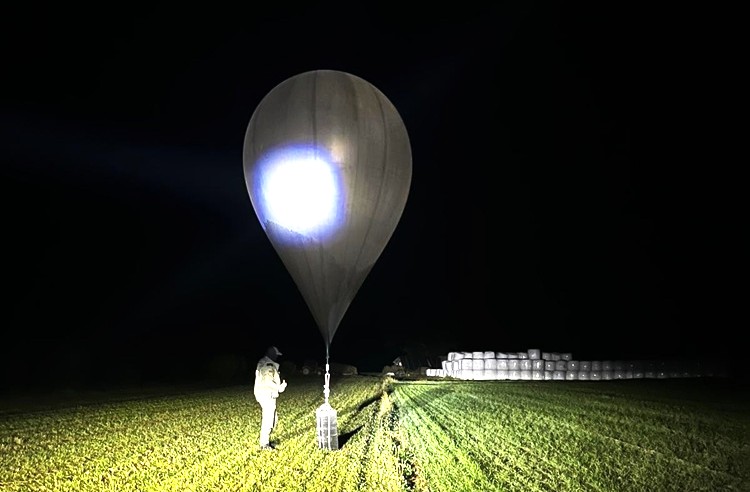
Lithuanian border guards intercept a weather balloon with cigarette contraband. Source: vsat.lrv.lt
More than 100 people suspected of smuggling have been detained by Lithuanian border guards so far this year. Some detainees have been given prison sentences, while others have been fined heavily.
“As for the Belarusian side, we can only say that no one could carry out such activities in the border zone without the permission of the border guards or other relevant authorities. Anyone doing so would have been detained and imprisoned”, believes Antanas Montvydas, VSAT Deputy Commander.
Lukashenko tried to clear himself of the smuggling accusations, but it came across as absurd. According to him, Belarusians were not involved – they were legally buying cigarettes at the tobacco factory and reselling them to Lithuanians, who then sent the goods from Belarus to their accomplices using balloons.
“If this makes me guilty of anything, I am prepared to apologise. But I don’t see where our people or I have done anything wrong”, the Belarusian ruler said.
PROFITABLE BUSINESS
No matter how hard Lukashenko tries to blame others, it is the Belarusian authorities who have created favourable conditions for cigarette smuggling. The country has long experienced an oversupply of tobacco products, with prices many times lower than in neighbouring countries.
According to the most recent data available, Belarus produces approximately 34 billion cigarettes, or 1.7 billion packs, each year. Slightly more than half is sold domestically or exported. The rest is illegally transferred abroad – to Russia and EU countries.
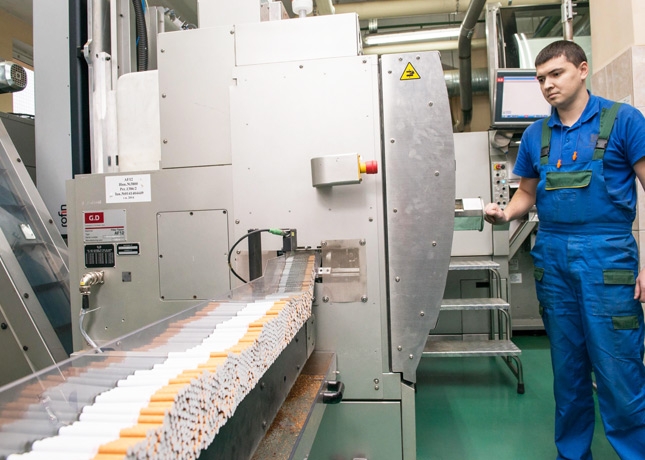
Cigarette production at the Neman Tobacco Factory. Source: proregion24.by
According to estimates by the consultancy firm KPMG, in 2024, 730 million cigarettes were illegally exported from Belarus to Poland, 440 million to Lithuania, and 180 million to Latvia. The main reason for smuggling is the significant price difference between countries. An average of €0.72 per pack in Belarus versus €4.46 per pack in Lithuania as of last year.
Lithuanian customs have not ruled out the possibility of the Belarusian regime being involved in the illegal delivery of tobacco products to the EU.
“Judging by the scale of the smuggling operation, the complexity of the concealment methods – sometimes involving factory equipment – and the tolerance of illegal activity, it is difficult to deny such connections”, Gediminas Kulikauskas, a representative for the Lithuanian Customs Criminal Service, told Buro.