
History of Belarus, the Russian version
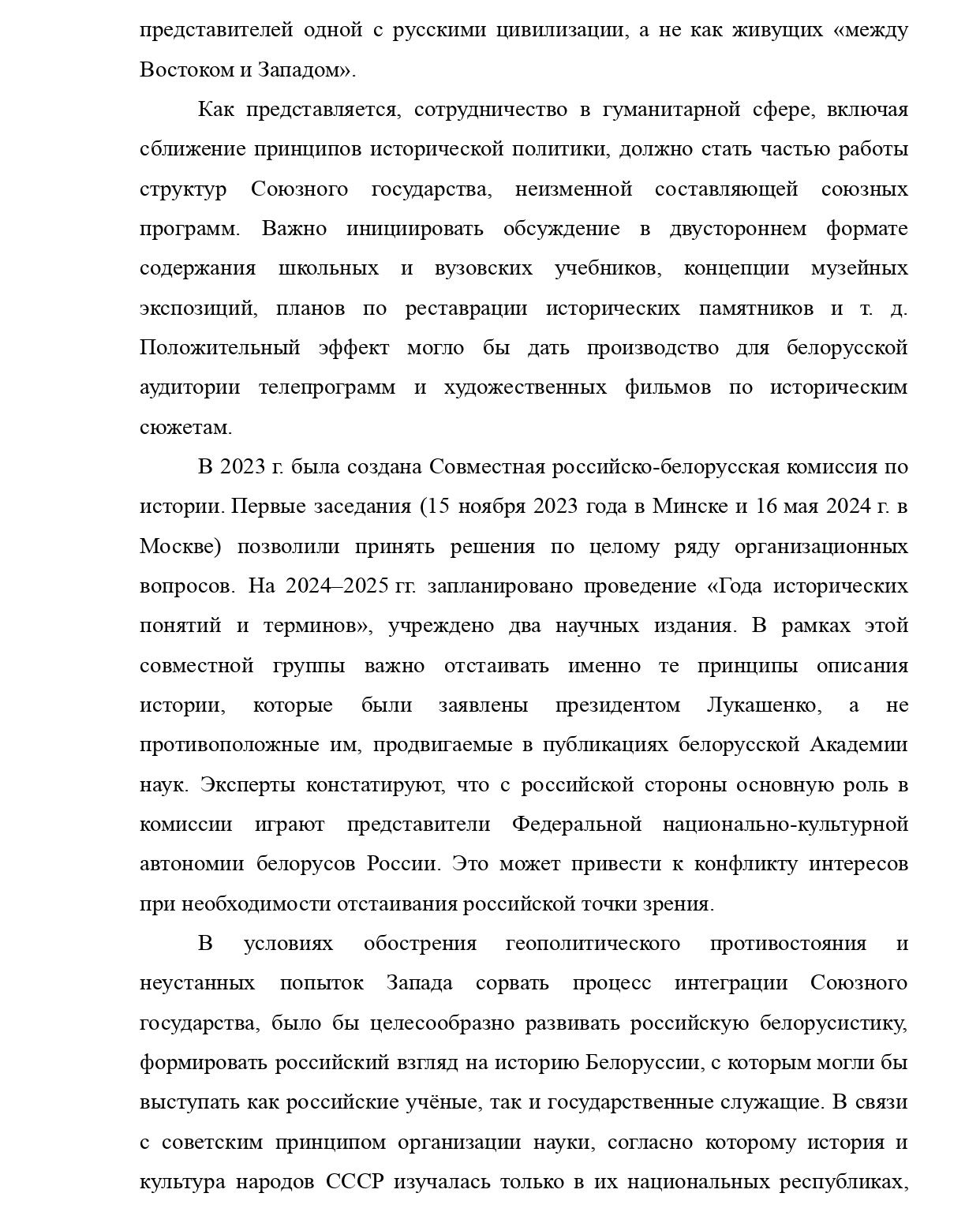
Rewriting the history of Belarus in Kremlin’s interests. According to leaked classified documents available to Buro, that is the goal Russian officials have set for the near future.
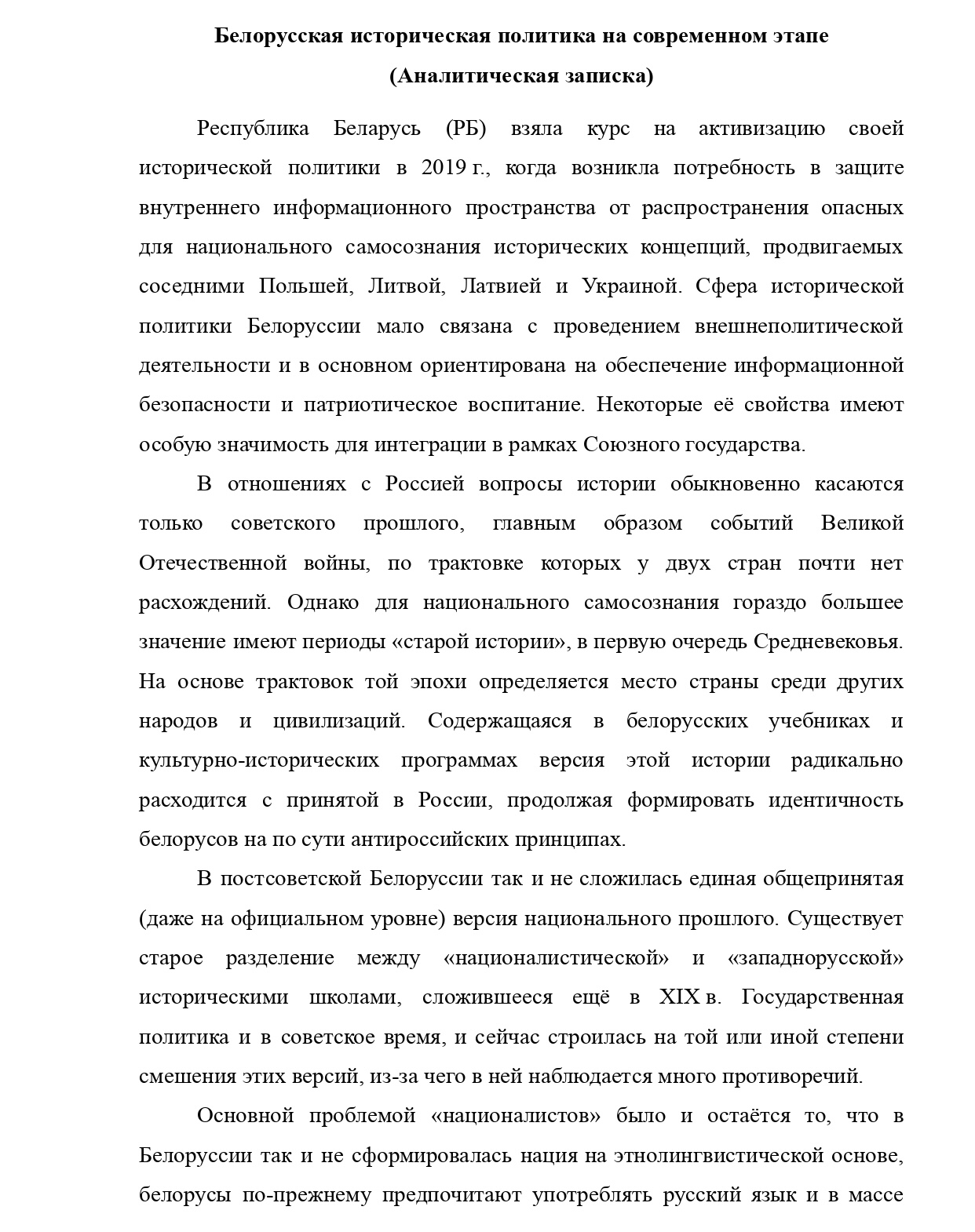
We have received copies of the Analytical Review and Policy Briefs 2022-2024 on Belarus’ historical policy, prepared by the Russian Institute for Strategic Studies (RISS). This think tank, established under Vladimir Putin’s administration office, provides support to federal agencies in the development of state policy in the area of national security. Mikhail Fradkov, former prime minister and head of the Foreign Intelligence Service, is the current director of RISS.
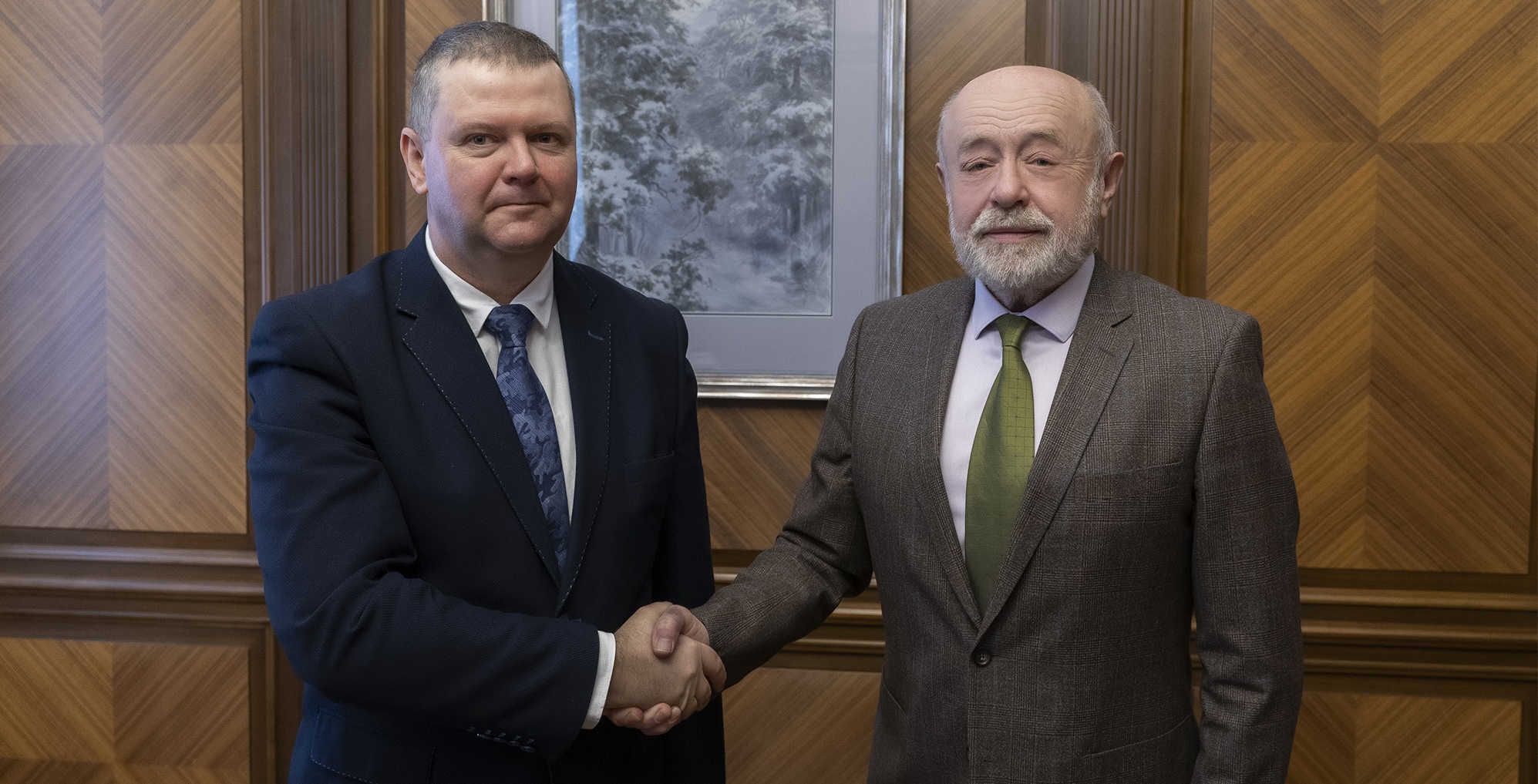
Mikhail Fradkov (right) is meeting with Oleg Makarov, director of the Belarusian Institute for Strategic Studies. Source: riss.ru
CLASSIFIED DOCUMENTS
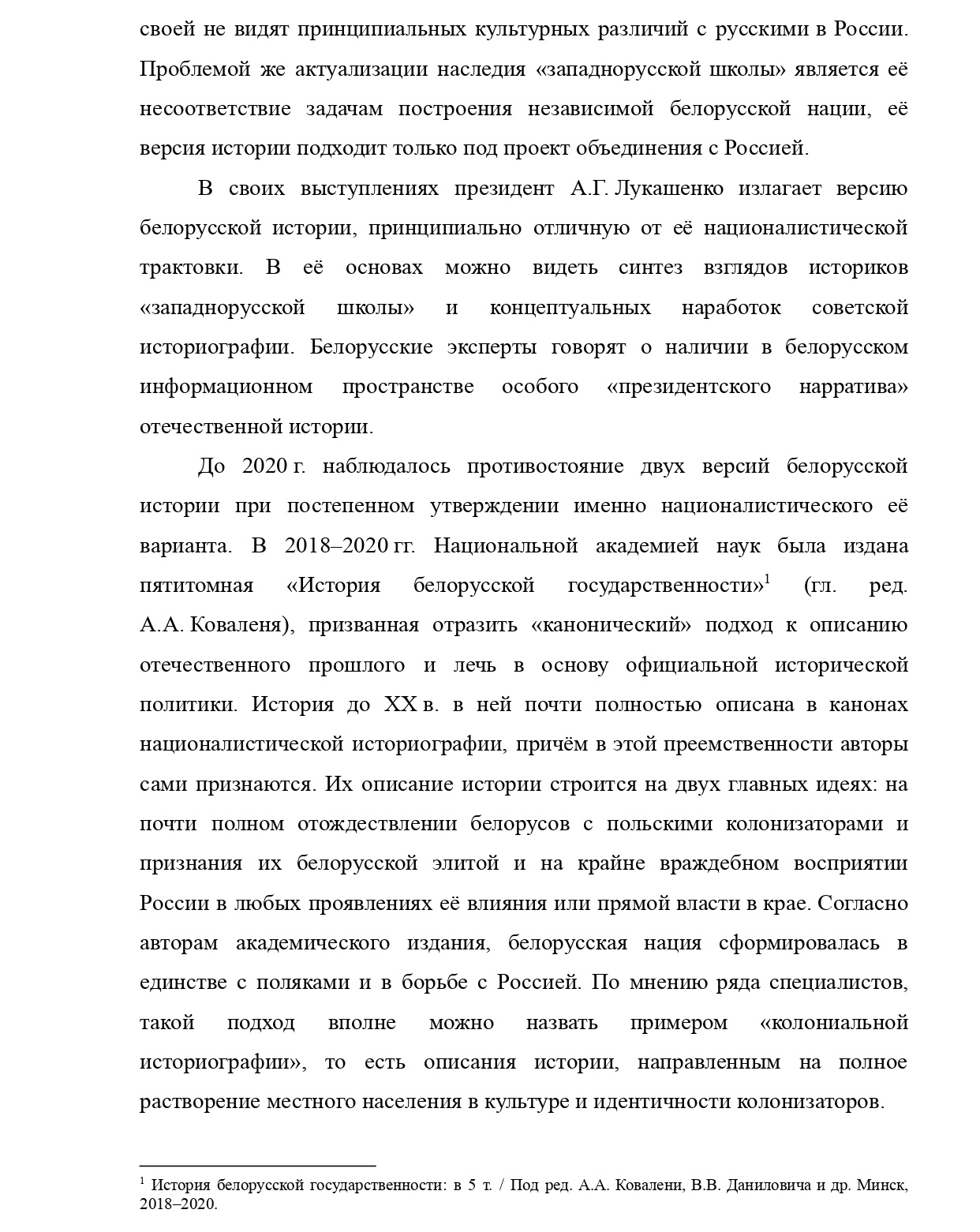
The documents provide insight into the Russian perspective on Belarusian history and national heroes. Kremlin analysts have identified the Soviet past, particularly the events of World War II, as the key contact point between the two countries. There is a high level of alignment in the interpretation of these events. According to RISS, however, “old history” periods are of greater significance for national self-awareness. The interpretations of these epochs primarily determine the country’s position among other nations and civilisations. Here, Belarus and Russia have much more divergences.
“The version of this history [’old history’] contained in Belarusian textbooks and cultural-historical programmes differs radically from the one accepted in Russia and continues to shape the identity of Belarusians on essentially anti-Russian principles”, says this year’s analytical note.
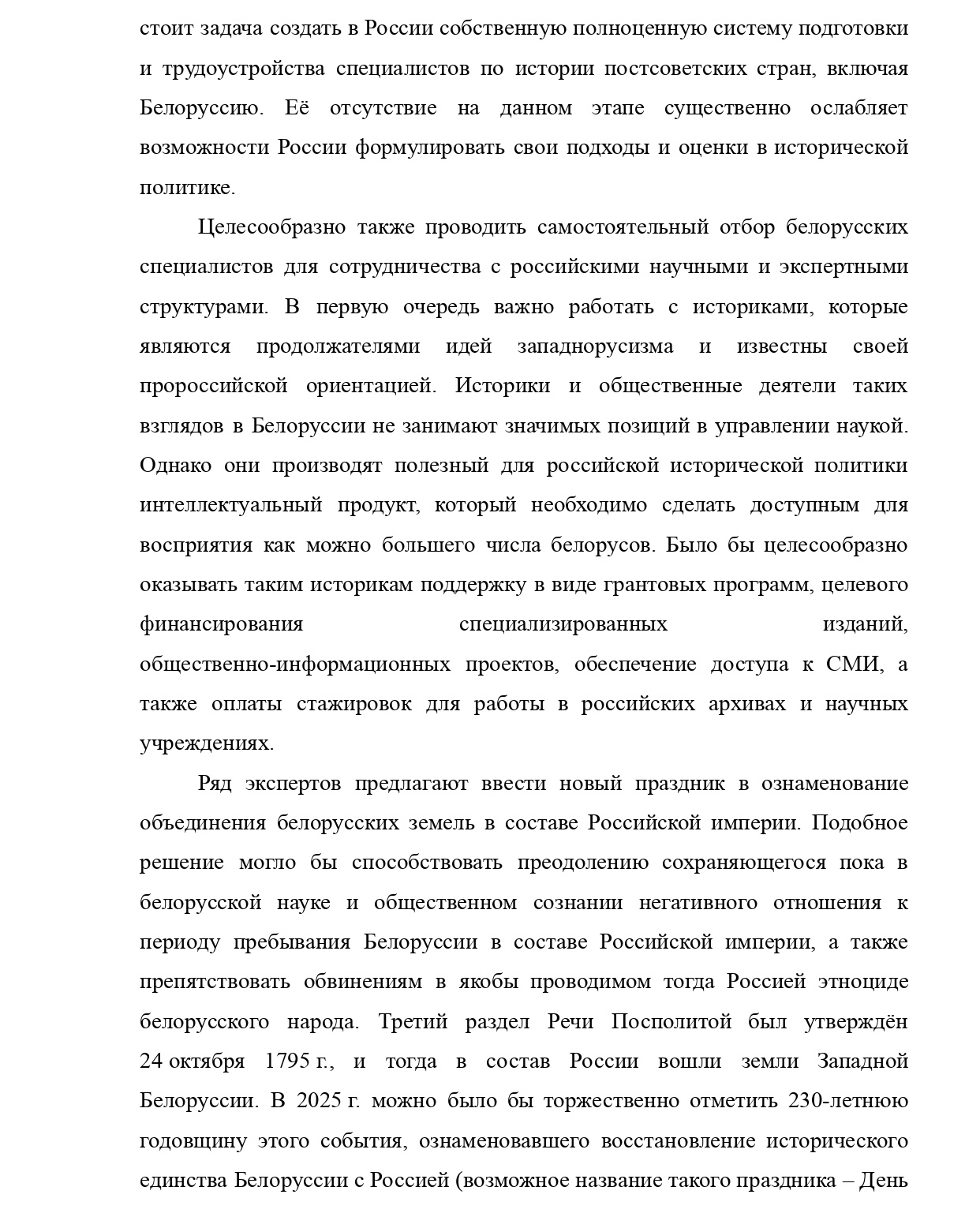
The authors of the note criticise scientists from the Belarusian Academy of Sciences for their nationalist approach to interpreting the history of Belarusian statehood, according to which “the Belarusian nation was formed in unity with the Poles and in struggle with Russia”. In contrast to this approach, the importance of working with Belarusian historians who “promote the ideas of Western Russism and are known for their pro-Russian orientation” is noted.
PIVOTAL FRACTURE
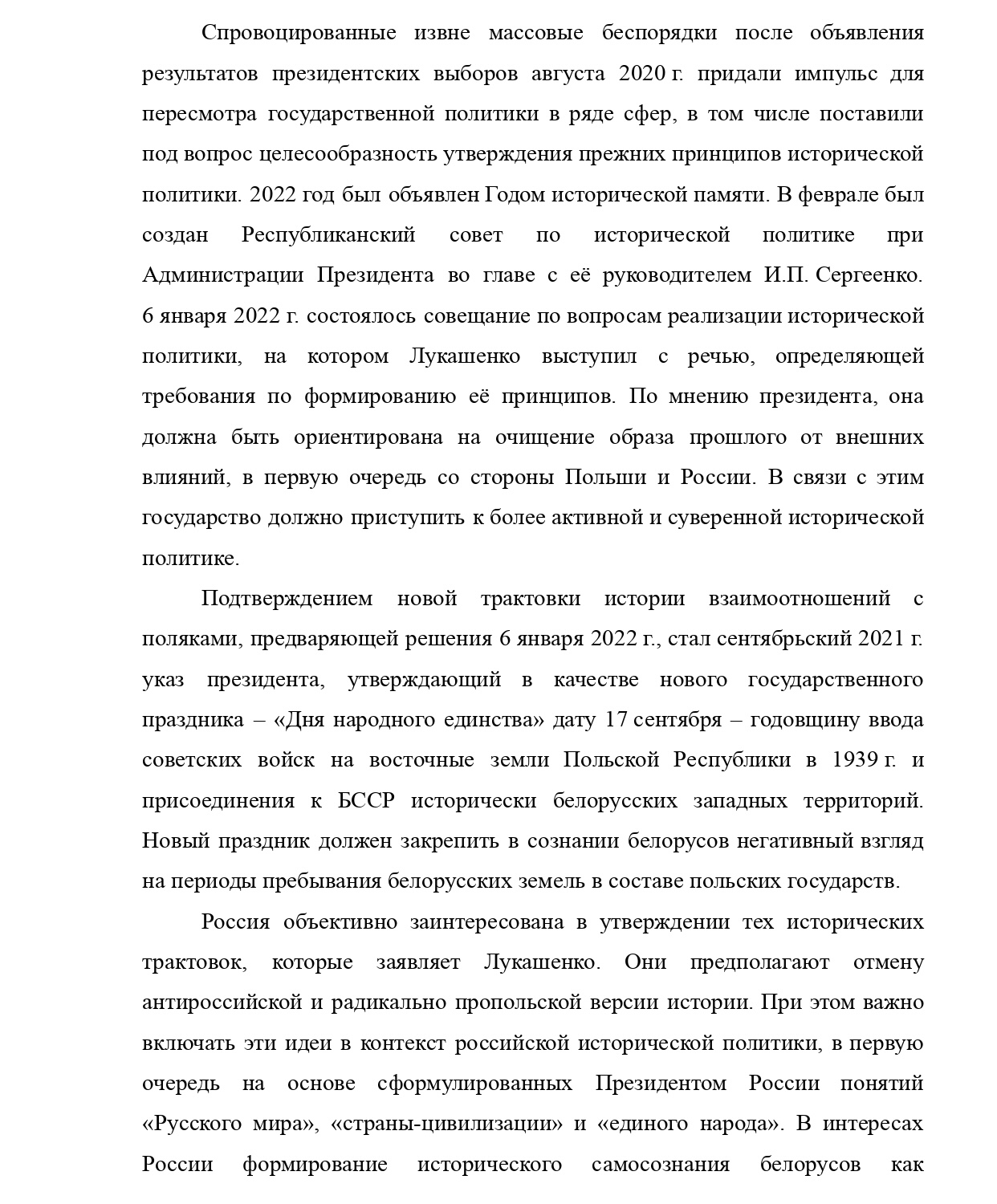
Until recently, the Belarusian authorities did not use history so actively for their propaganda purposes, except for World War II period. Aleksandr Lukashenko has sometimes flirted with a nationalist interpretation of Belarusian history, although he tends towards pro-Russian views. Mass protests in Belarus changed everything.
“In 2020, political protests reached a scale nobody expected. This challenged the political system. Evidently, the loyalty model developed and endorsed previously was not an effective solution and did not yield the desired results. The majority of the population is critical of the Belarusian authorities. This necessitated a radical rethinking of identity politics. Following the year 2020, there was a significant shift in the historical policy of Belarus", stated Aliaksei Lastouski, the academic director of the Belarusian Institute of Public History, in an interview with Buro.
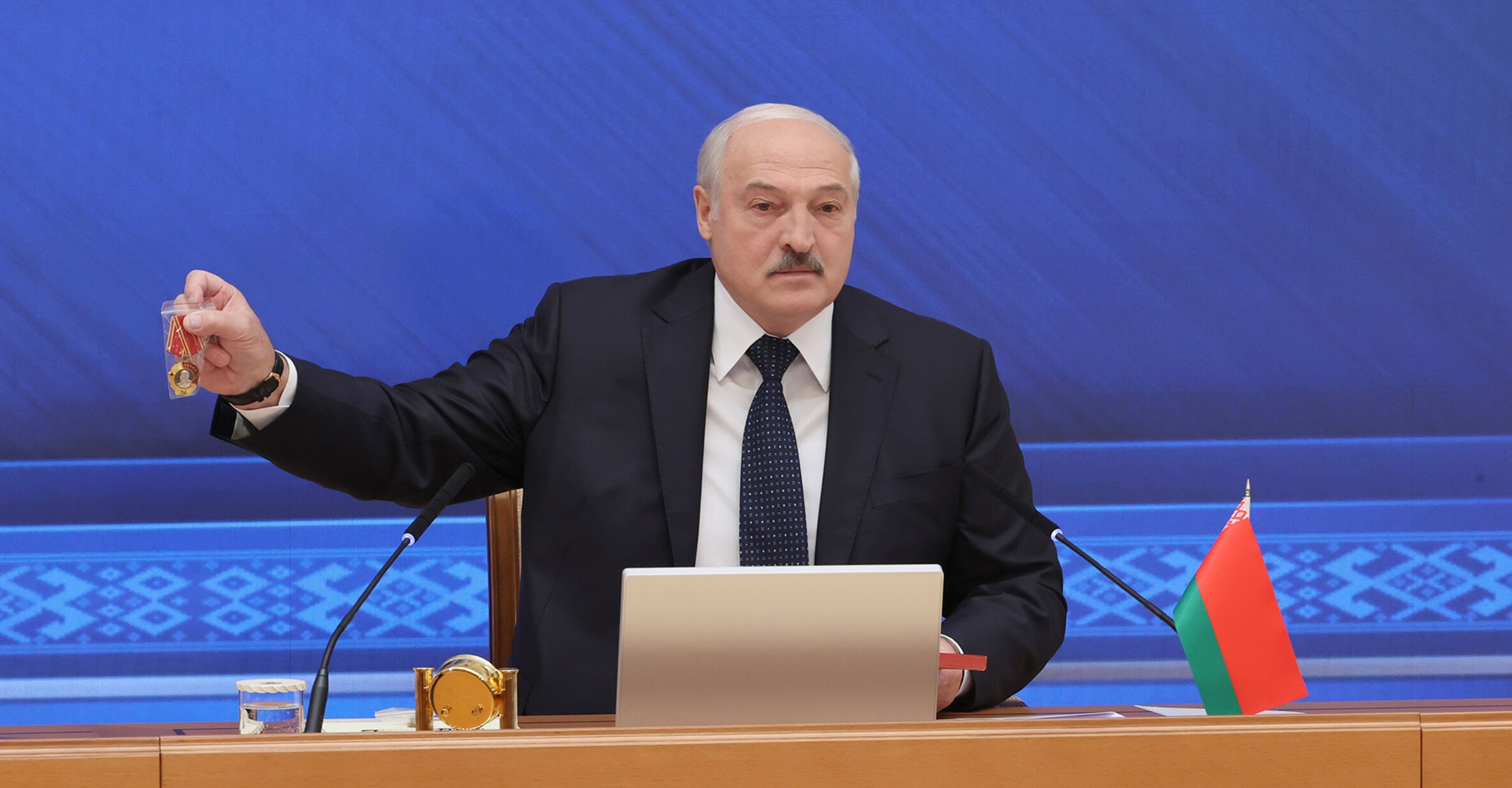
Aleksandr Lukashenko gives a demo lesson “Historical memory – the way to the future”. Source: president.gov.by
Belarus has declared 2022 the Year of Historical Remembrance. Lukashenko created the Republican Council on Historical Policy under his administration. A new subject, “History of Belarusian Statehood”, has appeared in higher education institutions. The mass extermination of Belarusians by the Nazis and their accomplices during World War II has been officially recognised as the genocide of the Belarusian people. The Prosecutor General’s Office of Belarus launched the relevant criminal investigation. The denial of genocide is a crime that is punishable by imprisonment.
ANTI-POLISH BIAS
New trends in the politics of history are also evident in relation to the Polish-Lithuanian Commonwealth. Lukashenko called this period of Belarusian history the “occupation of Belarusian land by Poles” and the “ethnocide of Belarusians". The leaders of the anti-Russian uprisings, Tadeusz Kosciuszko and Kastus Kalinouski, are no longer glorified as national heroes of Belarus because of their Polish origin.
“The political conjuncture demands the creation of an enemy image for mobilisation. And the Poles, with whom Belarus has a political disagreement, have become such convenient enemies”,says the academic director of the Belarusian Institute of Public History.
The desecration of the graves of soldiers from the Polish Home Army in Belarus is an excellent example of this. Analysts say that the new state holiday marking the annexation of Western Belarus to the Belarusian Soviet Republic in 1939 also has an anti-Polish orientation.
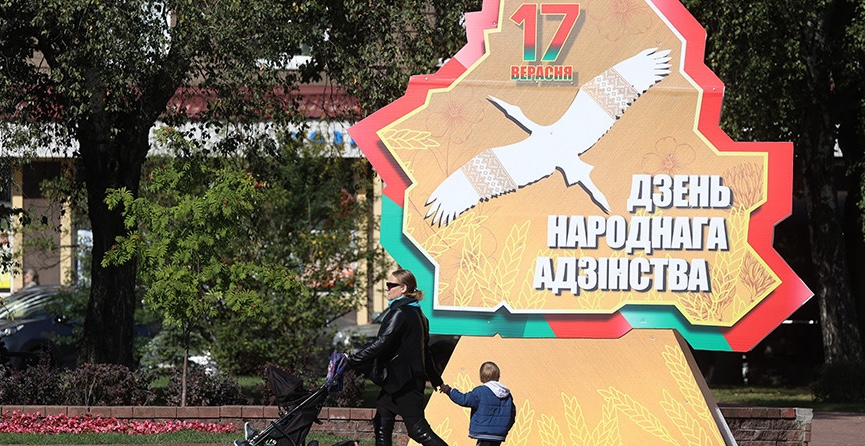
National Unity Day poster, Minsk. Source: belta.by
Russia has a vested interest in Lukashenko’s new historical policy as it entails “the abolition of the anti-Russian and radically pro-Polish version of history”, according to Kremlin analysts.
“It is also crucial to consider these concepts within the context of Russia’s historical policy, particularly in light of the ideas of a ‘Russian world’, ‘country-civilisation’ and ‘one nation’ put forth by the Russian president. It is in Russia’s interest to foster Belarusians’ historical self-consciousness as part of the same civilisation as Russians, rather than viewing them as situated between the East and West”, reads the analytical note from last year.
REAL THREAT
According to Aliaksei Lastouski, who has reviewed the documents of the think tank under Putin’s administration for Buro, the analytical notes prepared by RISS present a rather pessimistic view of the situation in Belarus and imply that Russia’s intervention is necessary.
To neutralise this perceived threat, the Kremlin Institute has developed a strategy for rewriting Belarus’s history in a way that serves the Kremlin’s interests and further integrates our country into the Russian sphere of influence. We found that some of the recommendations have already been put into practice.
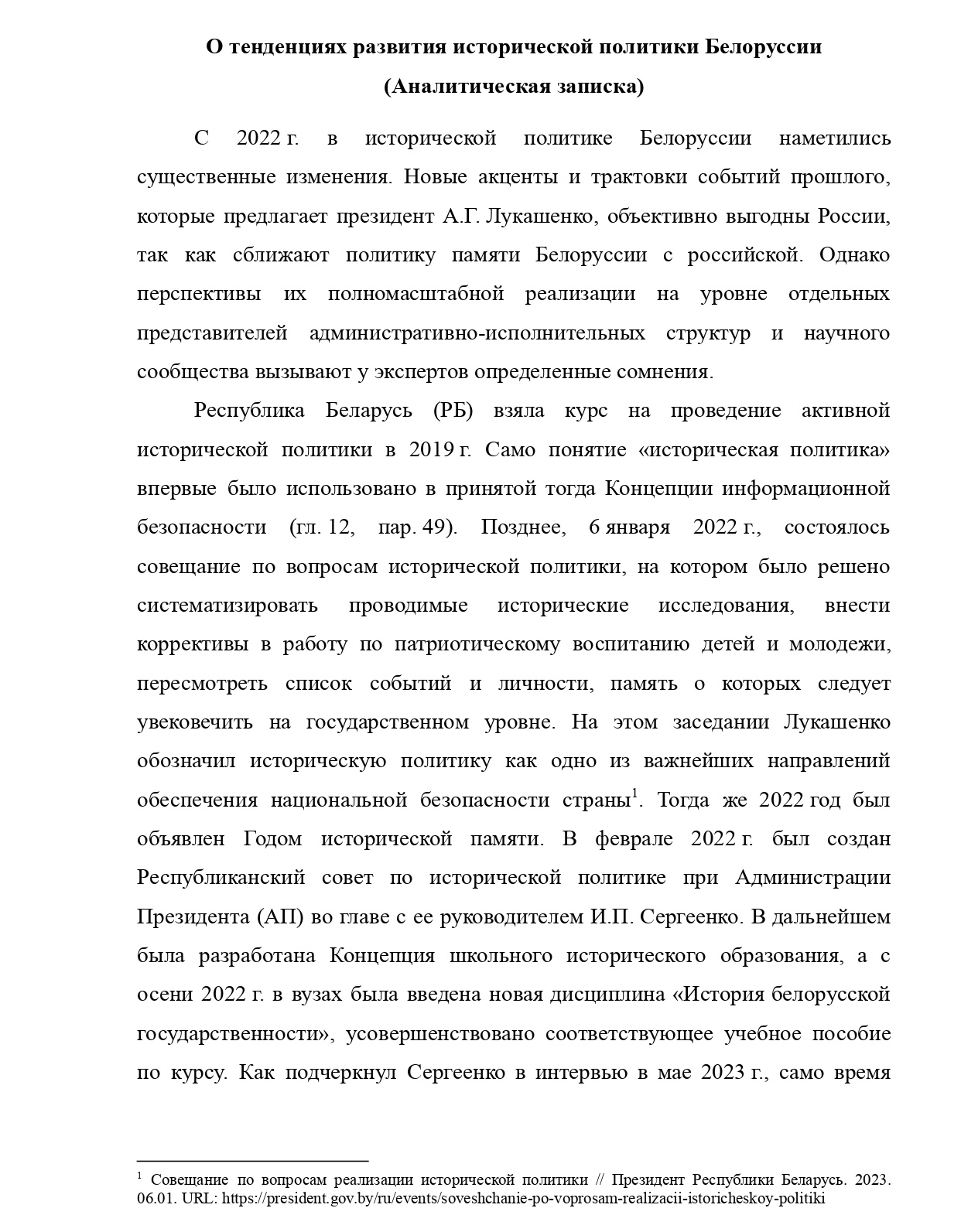
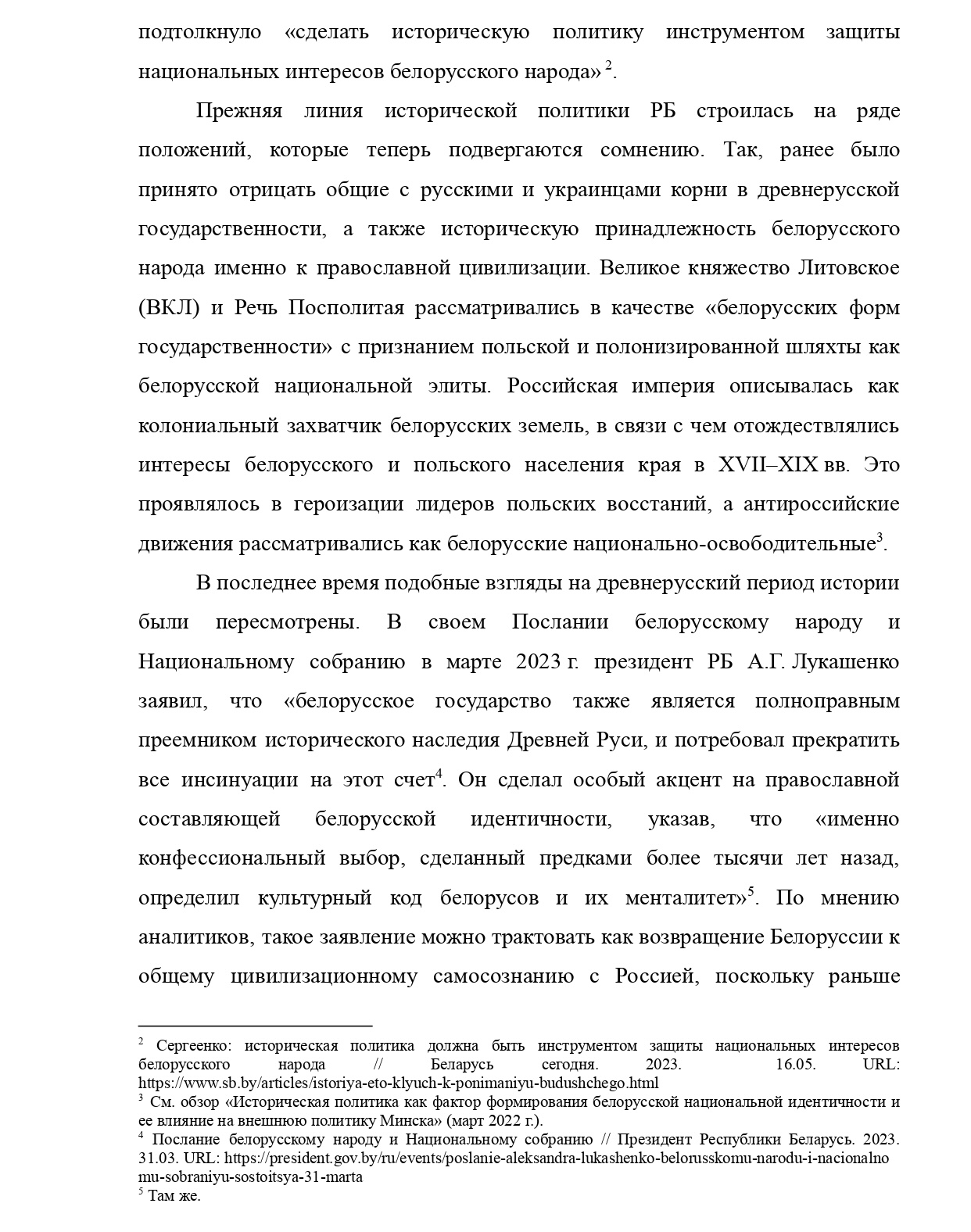
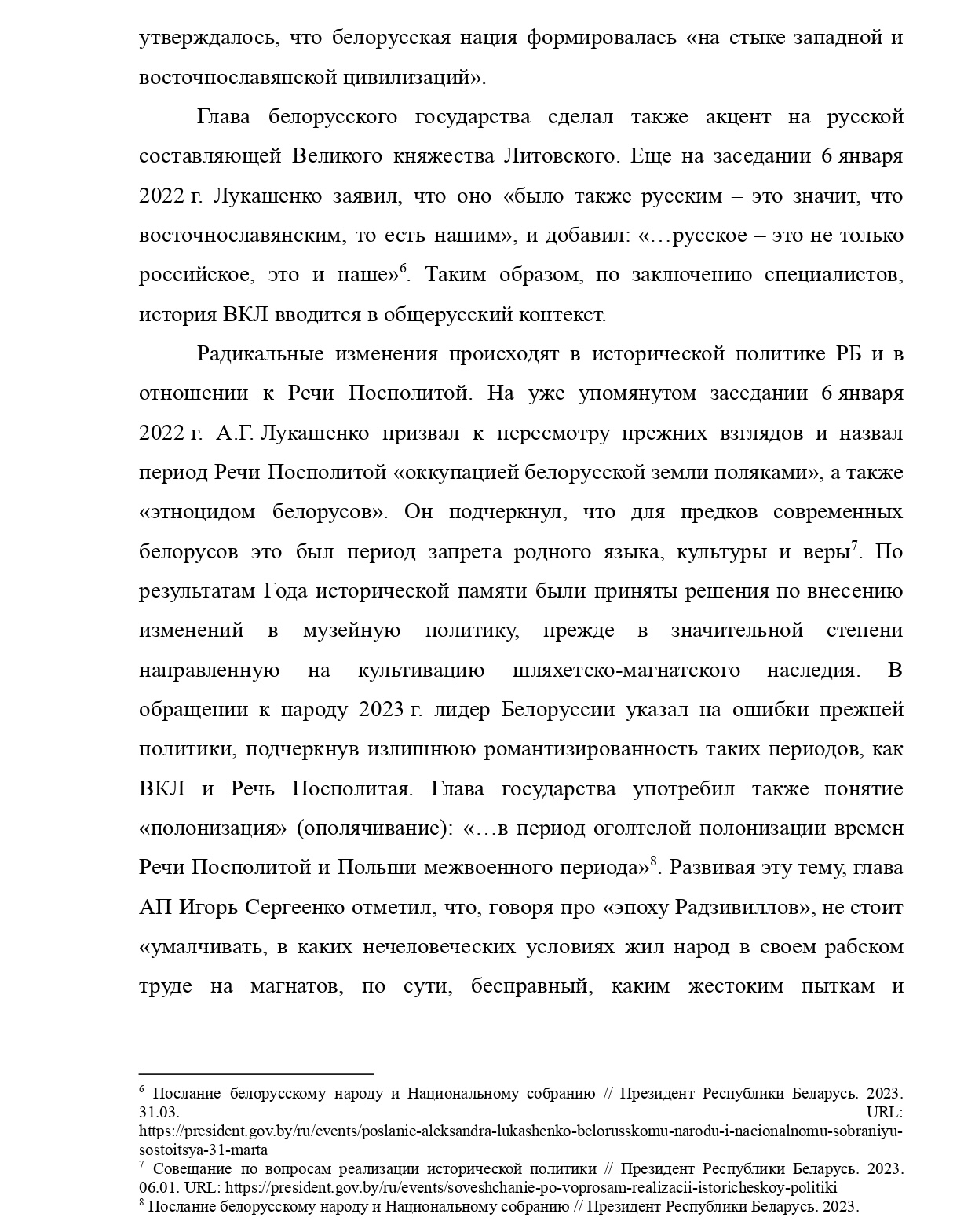
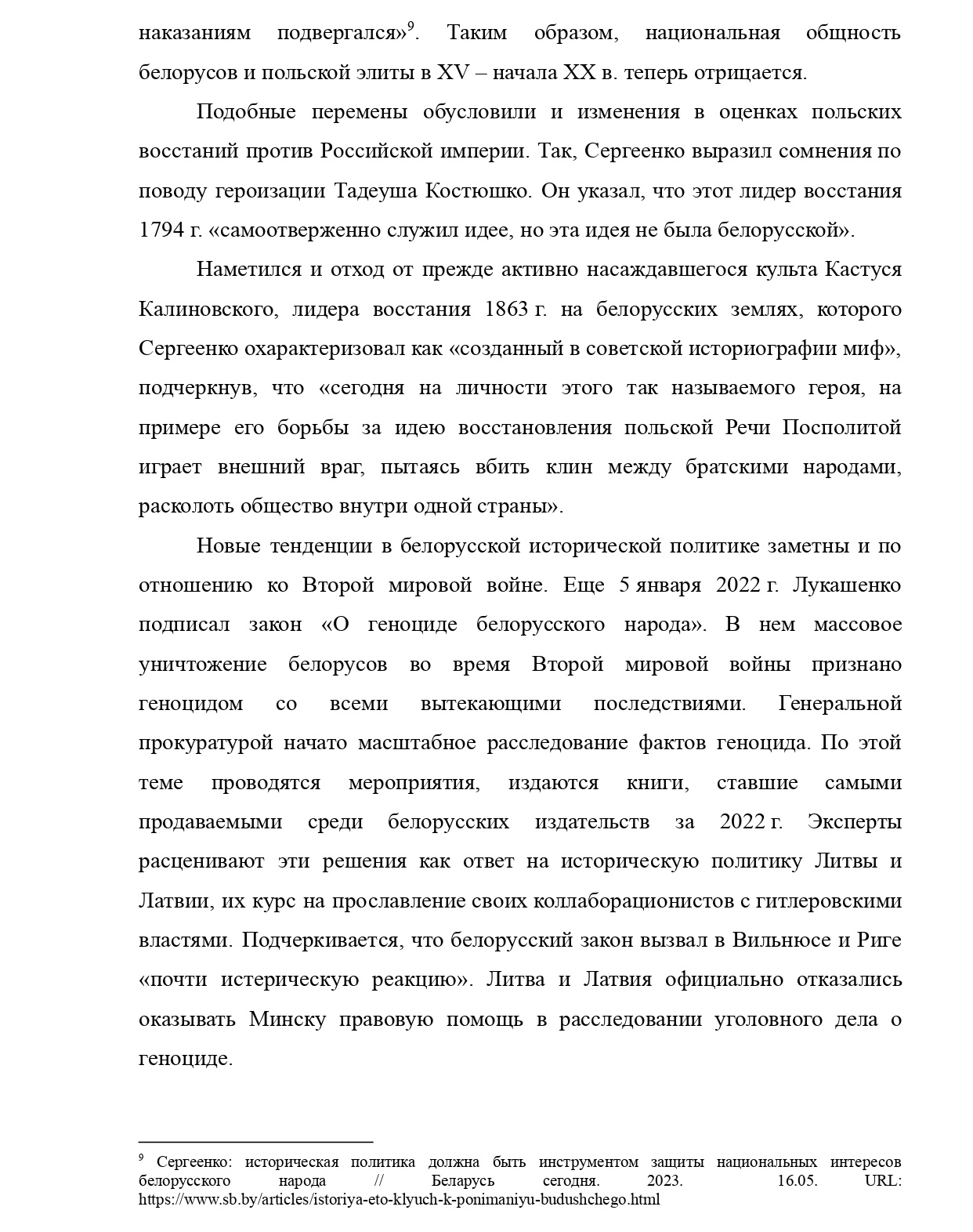
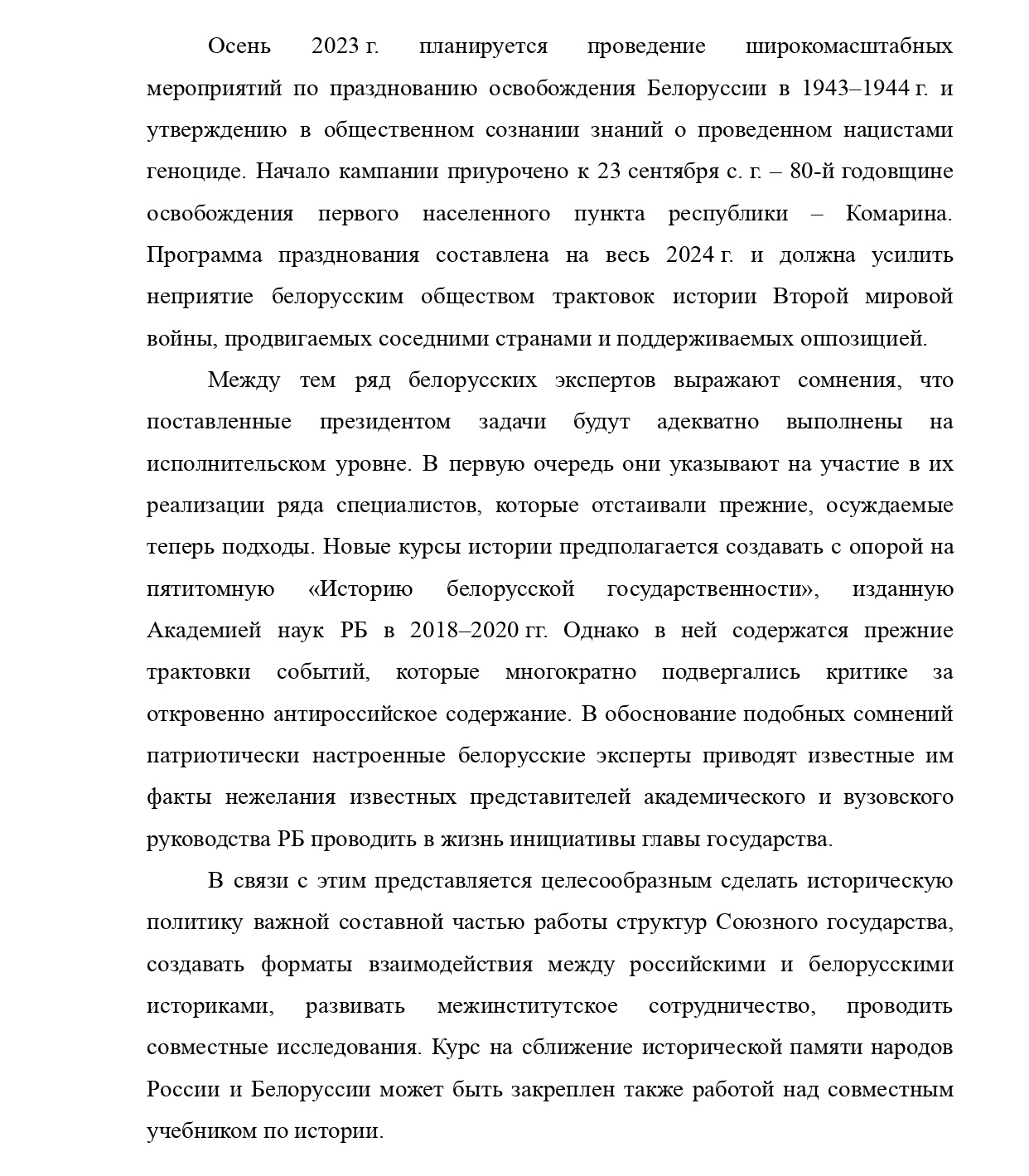
To illustrate, in 2023, a Russian-Belarusian expert and advisory council on history was established. In 2024, an interstate commission on history was set up to “discuss at the intergovernmental level the content of school and university textbooks, concepts of museum expositions, and plans for the restoration of historical monuments”. This year, students from Russia and Belarus have used a unified textbook on the history of the Union State.
“All recommendations set out in the notes are implemented. It all was in the air, but we have now realised that this was a planned initiative, with a specific objective to engage Belarus culturally and intellectually in terms of understanding history and identity within the context of the so-called Russian world”, said Lastouski.
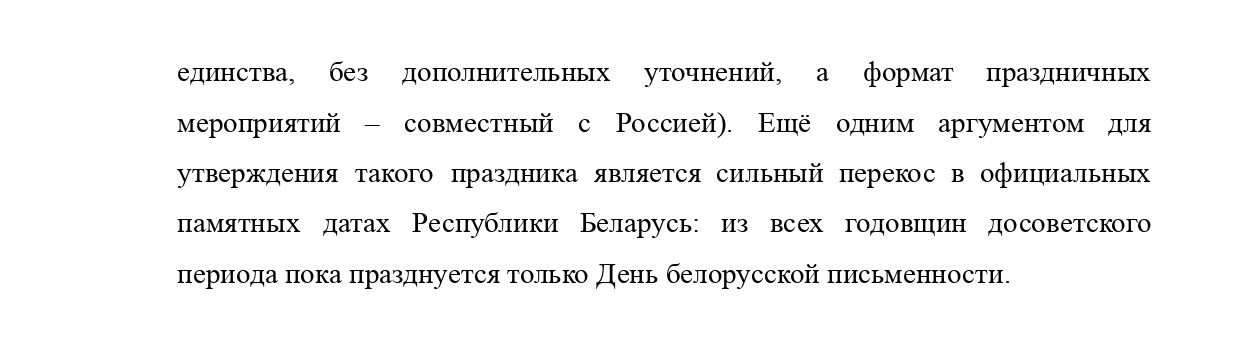
But the Kremlin has no intention of stopping there. Their objective is to provide training for specialists in Belarus’s history and historiography, with a view to opening research and analytical centres for their subsequent employment. We have previously reported about the Russian fund “Historical Memory" led by the controversial historian Aleksandr Dyukov. It is engaged in a systematic information campaign in Belarus and is directed by the Kremlin.
RISS places a high value on maintaining its working relationship with Belarusian historians known for their pro-Russian orientation. The documents name Vadzim Hihin, director General of the National Library of Belarus and PhD in History, as such historians. The think tank under the Putin administration has identified the need to “support historians through grant programmes, targeted funding for specialised publications, public information projects, access to the media, and payment for internships to work in Russian archives and scientific institutions”.
Interestingly, Doctor of Historical Sciences and Belarusian MP Ihar Marzaliuk has been criticised in RISS documents for espousing what are perceived to be “radically pro-Polish views” on Belarusian history.
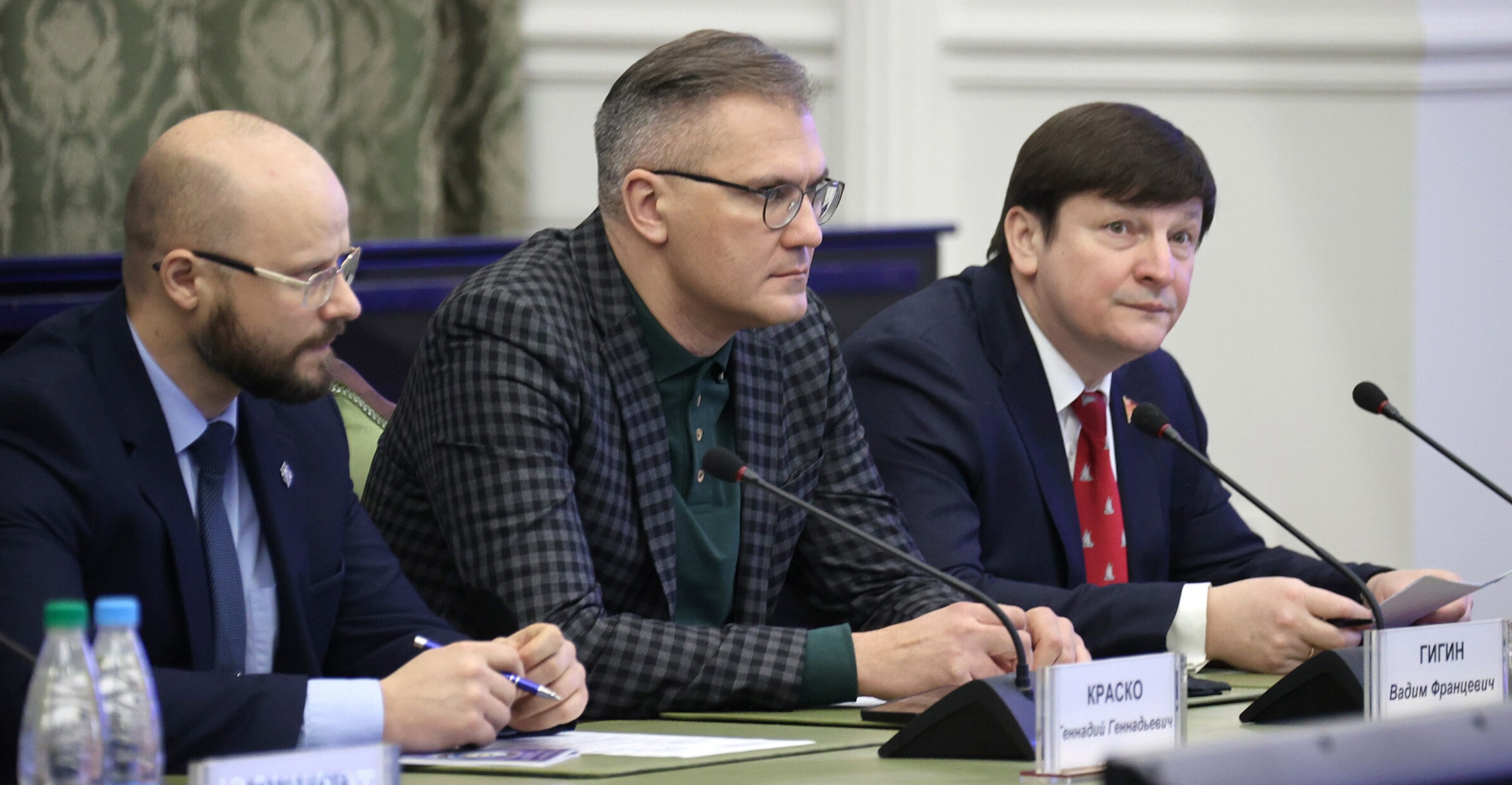
Ihar Marzaliuk (first right) and Vadzim Hihin (second right) at a meeting of the Republican Council on Historical Policy. Source: president.gov.by
In addition, Russian strategists are proposing the introduction of a new holiday – Unity Day – to commemorate the third partition of the Polish-Lithuanian Commonwealth, after which the Belarusian lands fully became part of the Russian Empire on October 24, 1795. The 230th anniversary of this event, which “marked the restoration of Belarus’s historical unity with Russia", should also be celebrated next year.
The academic director of the Belarusian Institute of Public History says the plans outlined by Russian analysts are dangerous for Belarus.
“How we see and interpret history directly affects the present. This is not just an academic discussion. The Russians have a clear plan to gradually remove all those references that would allow Belarusians to see themselves as a sovereign state through historical policy. It’s a real threat. Belarus disappearing and getting incorporated by Russia is one of the worst scenarios that could be expected”, Lastouski believes.
The RISS press service refused to comment on the documents it had prepared on the historical policy of Belarus.